How Oud Is Used in Modern Perfumery
Direct Answer & Key Takeaway
How Oud Is Used in Modern Perfumery: A comprehensive reference guide examining botanical resin genesis, chromatographic GC-MS analysis, terroir profiles, and practical buyer verification.
Executive Summary and Direct Answer
In the global landscape of luxury perfumery and traditional incense connoisseurship, `How Oud Is Used in Modern Perfumery` addresses an indispensable core question. Evaluating natural agarwood requires moving beyond commercial folklore to examine verified botanical taxonomy, xylem defense biology, and laboratory chemical diagnostics. Authentic oud is not an ordinary scented timber; it is the dense, oleoresin-saturated heartwood formed inside specific evergreen trees of the *Aquilaria* and *Gyrinops* genera when defending against microbial invasion. Understanding this transformation requires examining foundational principles such as [What Is Oud? A Beginner's Guide](/en/encyclopedia/what-is-oud-a-beginners-guide) alongside practical market evaluation frameworks like [How Agarwood Forms Inside Aquilaria Trees](/en/encyclopedia/how-agarwood-forms-inside-aquilaria-trees) to establish a grounded, objective standard.
Botanical Origins and Fungal Defense Biology
Historically, wild agarwood was collected through arduous forest tracking across the tropical and subtropical belts of Assam, the Cardamom Mountains, Indochina, and the Indonesian archipelago. Healthy *Aquilaria* trees produce white, soft, odorless wood with low density. The aromatic transformation begins only when the trunk or main root system suffers physical injury from wind shear, lightning, or boring insects such as the ambrosia beetle (*Zeuzera conferta*). This trauma breaches the bark barrier, allowing specialized fungal pathogens—predominantly *Fusarium solani*, *Phaeoacremonium parasitica*, and *Aspergillus* species—to colonize the living ray parenchyma cells. The host tree responds with a vigorous secondary metabolic defense, synthesizing viscous, complex sesquiterpenoids and phenolic compounds to isolate and compartmentalize the infection, gradually transforming pale timber into precious agarwood over decades.
Phytochemical Architecture and Chromatographic Character
Phytochemically, gas chromatography-mass spectrometry (GC-MS) demonstrates that natural oud comprises hundreds of volatile organic molecules whose precise ratio cannot be duplicated by synthetic fragrance accords. Principal among these are bicyclic and tricyclic sesquiterpenes, notably agarospirol, jinkoh-eremol, baimuxinal, kusunol, and multiple selinene isomers. In addition, exposure to heat releases heavy 2-(2-phenylethyl)chromone complexes that generate the sweet, balsamic, honeyed, and deep incense vapor admired during formal majlis gatherings. When contrasting authentic material with topics like [Vietnamese Oud vs Cambodian Oud](/en/compare/vietnamese-oud-vs-cambodian-oud), it becomes clear why commercial synthetic accords smell linear and aggressive, whereas natural extracts reveal a living, multifaceted evolution over twelve to twenty-four hours on skin and fabrics.
Regional Terroir and Geographic Distinctions
Regional terroir and microclimate impart an indelible signature to every agarwood origin. In the humid, iron-rich laterite soils of Assam and Northeast India, *Aquilaria agallocha* yields a potent, leathery, fermented, and barnyard-inflected profile revered by traditional Gulf collectors. Conversely, *Aquilaria crassna* harvested in Cambodia's Pursat and Koh Kong provinces develops luscious dried-fruit, apricot, and warm honeycomb facets with minimal animalic sharpness. In Sri Lanka, *Gyrinops walla* found in the southwestern rainforest canopy synthesizes an oceanic, green-resinous, and cooling herbal aroma that has redefined collector expectations over the past decade. Discerning these geographic nuances is fundamental when analyzing issues discussed in [Oud Wood, Oud Oil and Oud Accord: Differences](/en/compare/oud-wood-oud-oil-and-oud-accord-differences).
Commercial Grading Nuances and Market Myths
Commercial trading terminology frequently creates confusion for buyers. Classifications such as 'Muri', 'Salla', 'Seufi', 'Double Super', and 'Triple Super' are trade conventions describing wood thickness, visual appearance, and resin coverage rather than universal scientific grades. A thin, highly resinous wood sliver (*Salla*) often boils with cleaner aromatic vapor than a thick, porous piece designated as 'Super' by an eager trader. Furthermore, the popular belief that all sinking wood (*Gharqan*) represents the pinnacle of purity has prompted counterfeiters to artificially load inferior timber with molten lead, industrial resins, and chemical colorants to simulate density. Evaluating quality requires prioritizing resin purity and olfactory elegance over superficial weight tests, as detailed in [Why Natural Oud Has So Many Aroma Profiles](/en/encyclopedia/why-natural-oud-has-so-many-aroma-profiles).
Hands-on Charcoal Testing and Sensory Verification
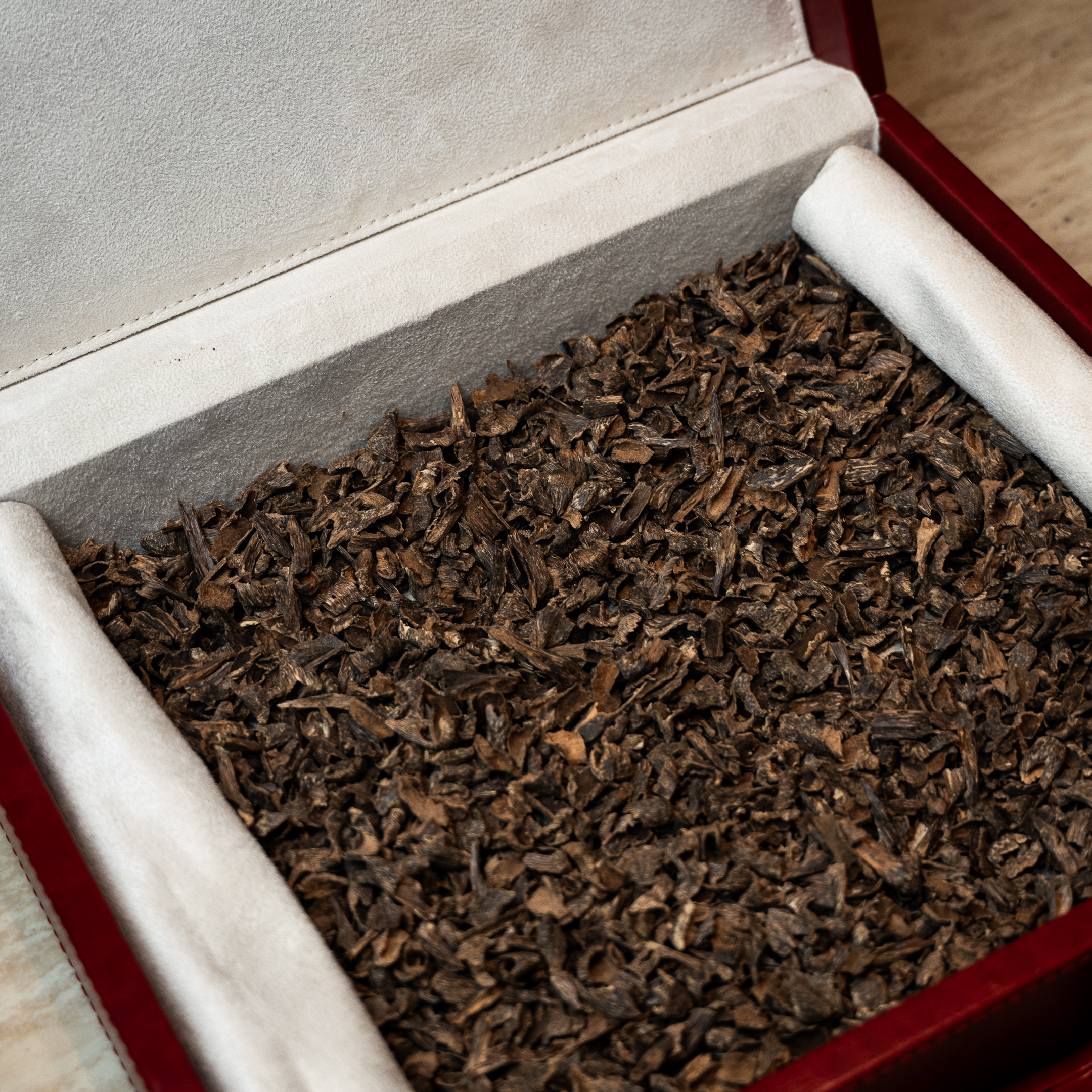
Practical sensory verification on charcoal serves as the definitive test of quality. When placed on gentle charcoal dusted with fine ash, a genuine agarwood sliver should bubble smoothly with micro-droplets of golden resin, releasing a translucent, bluish-white smoke plume that fills the room without causing eye irritation or respiratory tightness. Artificially pressurized or chemically dyed wood burns with harsh, acrid black smoke smelling of petroleum solvents or scorched plastic. For distilled oil (*Dehnal Oud*), apply a single drop to the wrist: pure hydro-distilled oil unfolds through top, heart, and base phases over eight to twelve hours, leaving a soft, ambergris-like skin residue.
Environmental Sustainability and CITES Regulations
Because historical harvesting severely impacted ancient wild forests, all *Aquilaria* and *Gyrinops* species are protected internationally under Appendix II of the Convention on International Trade in Endangered Species of Wild Fauna and Flora (CITES). Legitimate traders must provide full export documentation and verify sustainable cultivation origins. Readers seeking verified selections can explore the [Fine Fragrances & Perfume Collection](https://antiqueoud.com/collections/eau-de-parfum-perfume), which curates documented specimens such as [Velvet Musk](https://antiqueoud.com/products/velvet-musk) through certified, responsible supply channels, ensuring environmental integrity and unmatched aromatic fidelity.
Archival Storage and Long-Term Aging
Preserving natural agarwood and distilled oils requires disciplined environmental control. Resinous wood pieces should be stored in airtight glass containers or untreated Spanish cedar caskets, isolated from excessive humidity and direct UV light to prevent mold growth and aroma degradation. Pure Dehnal Oud oils mature gracefully when kept in dark violet Miron glass flacons at 18 to 22 degrees Celsius. Over years of controlled resting, trace volatiles esterify, softening sharp top notes and deepening the buttery, multidimensional base notes.
Master Application and Fragrance Layering Protocol
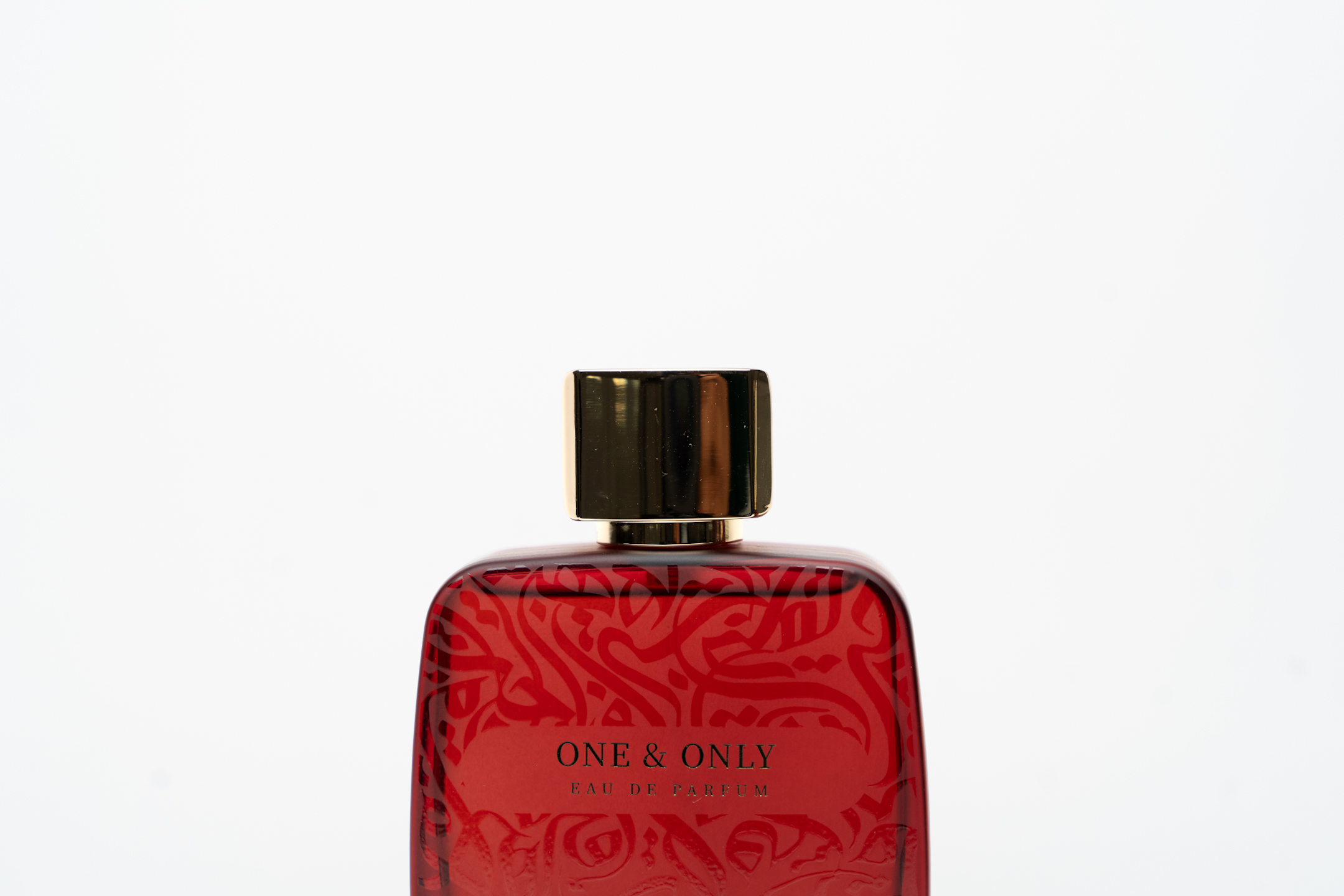
In traditional perfumery art, layering pure oud with fine fragrances creates a distinguished signature sillage. Applying a trace of pure Dehnal Oud to pulse points before misting an Eau de Parfum anchors the lighter floral, citrus, or spice notes to an enduring woody foundation. As body heat radiates throughout the day, the heavy sesquiterpene base slowly releases its aromatic warmth, preventing the lighter notes from evaporating prematurely. Integrating guidelines from [Aquilaria Species Used for Agarwood](/en/encyclopedia/aquilaria-species-used-for-agarwood) enables enthusiasts to curate balanced, culturally authentic combinations.
Connoisseur Conclusion and Practical Evaluation
Ultimately, mastering `How Oud Is Used in Modern Perfumery` empowers collectors to appreciate natural agarwood with both scientific rigor and sensory reverence. By cross-referencing documented analyses, testing samples on low-temperature heat, and studying authoritative guides like [Gyrinops and Agarwood: Botanical Overview](/en/encyclopedia/gyrinops-and-agarwood-botanical-overview) and [Resin Formation: What Science Knows](/en/encyclopedia/resin-formation-what-science-knows), enthusiasts preserve an ancient aromatic heritage while supporting transparent, sustainable craftsmanship for future generations.
Authoritative References and Sourcing Standards
1. **CITES Secretariat (Geneva, 2023)**: *Convention on International Trade in Endangered Species: Appendices and Timber Identification Manual*. 2. **Royal Botanic Gardens, Kew**: *Agarwood Botanical Science, Phytochemistry, and Aquilaria Species Vulnerability*. 3. **Journal of Essential Oil Research**: *Phytochemical Profiling and Chromatographic Analysis of Natural Agarwood Sesquiterpenes*. 4. **International Fragrance Association (IFRA)**: *Purity Standards and Natural Complex Substance Safety Assessment*. 5. **Antique Oud House Archives**: *Field Research, Distillation Case Studies, and Botanical Quality Frameworks (Dubai, UAE)*.
Authenticated Selections for this Topic
The products below correspond directly to the botanical origin, grade, or distillation discussed in this article. Backed by Antique Oud authentication.